


It is often hard to determine the factors guiding Donald Trump a month into the US and Israel's programme of strikes on Iran.
However, it remains clear he has an eye on the global crude markets.
A word – or tweet – from the American leader concerning his strategies used to ignite big fluctuations in prices, as traders reacted to indications the tensions could escalate or de-escalate.
But in recent days, traders seem to be growing more wary about the significance of his remarks.
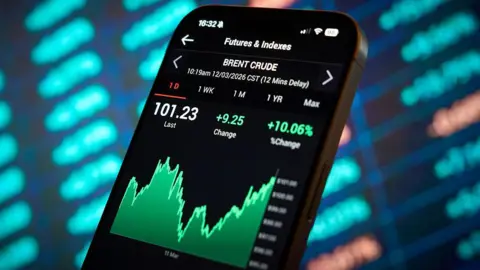
The price of oil was hovering around approximately $72 a barrel before 28 February, when the military action against Iran started.
Recently, it climbed to $118 a barrel on 19 March and by Friday afternoon was sitting at around $112 – significantly higher than its pre-conflict price.
Below are several examples from the past month where Trump and the financial markets seem to have influenced one another – with differing results.
Use the navigation button to proceed to the next slide.
"Oil prices have acted as a barometer for broader geopolitical and economic risks, jumping when Trump's tone grows hawkish and declining when his comments becomes more conciliatory," says one financial expert.
He continues that financial markets are appropriately reactive to those cues, given the significant macroeconomic threats that come with climbing oil prices.
"Investors are trying to assess genuine volatility," he comments. "Markets can appear skittish or uncertain, but what they're actually doing is navigating event risk in real time, with oil positioned directly at the centre of that."
But, it can be tough for traders to determine how to position themselves, especially since some of Trump's statements seem designed to moving oil prices, instead of conveying policy, says another investment advisor.
"As they say, the first casualty of war is clarity," he remarks. "It is likely much of the dialogue back-and-forth around diplomatic progress, and the opposite, very much are aimed at merely shifting the market price of oil."
Market Reactions Grow More Subdued
On a recent Thursday, moments after US equity markets saw their largest decline since the start of the Iran war, Trump stated discussions with Iran were going "very well" and he was delaying military strikes on Iran's oil facilities until at least 6 April.
However, the oil price continued to rise.
One head of FX strategy points out that investor responses are "growing increasingly subdued" because of the "significant disconnect" between Trump's optimistic statements and the lack of acknowledgement from Tehran.
"In light of the optics, many investors do not foresee an quick conclusion to the hostilities and markets remain nervous."
Another market expert says investors have also adapted to Trump "often altering course at signs of geopolitical, equity market or financial stress".
"We are seeing a amount of doubt, or even downright suspicion, taking hold at the margins," he says.


